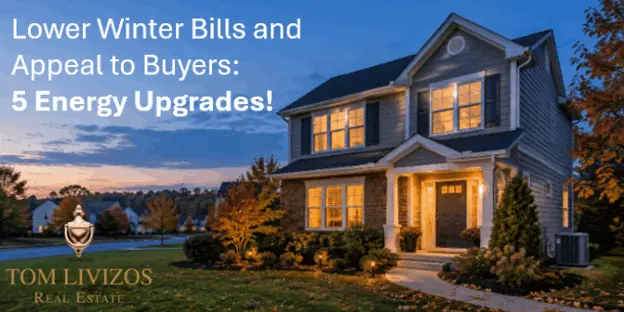
Lower Winter Bills and Appeal to Buyers: 5 Energy Upgrades to Consider
As colder weather settles into Delaware, small comfort problems can become harder to ignore. One room never feels warm enough. A draft appears near a window or stairway. The heating system seems to run longer than expected. Those signs do not always mean a homeowner needs new windows or an expensive new system, but they may indicate that the house is losing energy somewhere.
Energy efficiency is often presented as a shopping list: buy a smart thermostat, replace the windows or upgrade the heating system. In reality, the best improvement depends on the home. Air leaks, insufficient insulation, damaged ductwork and aging equipment can all affect comfort and energy use. Solving the wrong problem first can mean spending more without addressing the real source.
There is also a real-estate consideration. Some improvements, such as a newer heating system or smart thermostat, are easy for buyers to recognize. Others, including insulation, air sealing and duct repairs, are hidden and need documentation to become meaningful selling features. The goal is not to complete every possible upgrade. It is to understand which improvements may make the home more comfortable now-and which ones may be worth highlighting when it is time to sell.
Start With the Drafts
Air sealing can be one of the most cost-effective ways to improve a home’s comfort and energy efficiency, according to the U.S. Department of Energy. Common problem areas include gaps around windows and doors, openings in the attic, and places where plumbing or wiring enters the home.
Some small drafts may be addressed with the right caulk or weatherstripping. Larger sealing projects-especially around heating equipment, chimneys and attic spaces-should be evaluated by a qualified professional so the work does not create ventilation or safety problems.
Most air-sealing work is hidden after it is complete. Homeowners who may sell in the future should keep contractor invoices and any before-and-after test results. Those records can help buyers understand what was improved even when they cannot see it.
Insulate Where It Matters
Insulation slows the movement of heat through a home, while air sealing helps reduce uncontrolled airflow. The two improvements work together, which is why simply adding more insulation may not solve a comfort problem if significant air leaks remain.
ENERGY STAR estimates that air sealing and adding insulation in attics, floors over crawl spaces and accessible basement areas can save homeowners an average of about 15% on heating and cooling costs, or 11% on total energy costs. ENERGY STAR is a federal energy-efficiency program that sets performance requirements for qualifying products and home improvements. Its savings figures are national estimates based on modeled improvements-not guaranteed results for an individual Delaware home.
For future resale, save records showing where insulation was added, the type of material, the installed R-value when available, and the completion date. Photos taken during the work can make the hidden improvement easier to explain later.
Don’t Overlook the Ductwork
When heated air escapes through loose or damaged ducts, even efficient equipment may not perform as intended. ENERGY STAR reports that, in a typical house, about 20% to 30% of the air moving through the duct system can be lost through leaks, holes and poor connections.
That can contribute to rooms that never feel warm enough, weak airflow and a system that runs longer than expected. A qualified contractor can inspect the entire duct system, repair damaged connections and determine whether sealing or insulation is appropriate.
Duct repairs are not visually impressive, but comfort is. Buyers may notice uneven temperatures during a showing even if they cannot identify the cause. Keep the contractor’s report and paid invoice so the completed work can be described accurately.
Use a Smart Thermostat Wisely
A smart thermostat can help reduce unnecessary heating and cooling by using schedules, remote control and automated settings. ENERGY STAR-certified thermostats must demonstrate energy savings using field data, but the amount a household saves depends on the HVAC system, settings, occupancy, climate and how the controls are used.
Before purchasing one, confirm that it is compatible with the home’s heating and cooling equipment. Some high-efficiency or multi-stage systems work best with a specific controller. A smart thermostat may improve control and convenience, but it cannot correct missing insulation, leaking ducts or other underlying problems.
This is one of the easiest efficiency features for a buyer to recognize. Before a sale, leave the model information and instructions, remove personal account access, and make sure the thermostat can be transferred to the new owner.
Replace Equipment at the Right Time
Replacing functioning equipment only to market a home as “energy-efficient” may not be the best use of a homeowner’s budget. However, when a furnace, air conditioner, heat pump or water heater is already approaching replacement, efficiency should be part of the decision.
Correct sizing and installation matter as much as the advertised efficiency rating. Before replacing heating or cooling equipment, a qualified contractor should evaluate the home rather than selecting a system based on square footage alone. Oversized equipment can cost more and may reduce comfort and efficiency.
A heat-pump water heater may also be worth considering when an electric water heater is due for replacement. ENERGY STAR estimates that a certified model can save a four-person household about $550 per year compared with a standard electric water heater. Actual savings depend on local electricity rates, hot-water use, installation conditions and the equipment being replaced.
Newer heating, cooling and water-heating equipment is easy for a buyer to understand. Keep the invoice, model and serial numbers, efficiency information, warranty, maintenance history and permit records when applicable.
Before You Replace the Windows
New windows are highly visible, but they are not automatically the best first energy project for every house. A draft near a window may come from the window itself, gaps around the frame, nearby insulation problems or air leakage elsewhere in the home. Identifying the source first can help homeowners avoid committing to a large project that does not solve the actual problem.
Real estate professionals report that energy-efficient features matter to many clients, but that does not guarantee a higher sale price. In the National Association of REALTORS®’ 2025 national member survey, 37% of respondents rated windows, doors and siding as very important green features to clients, while another 49% rated them somewhat important.
The practical takeaway is not that homeowners should never replace windows. It is that a highly visible improvement is not automatically the most useful or cost-effective place to begin.
What Buyers Can See
Visible improvements are naturally easier to market, but hidden work can still strengthen a home’s story when it is documented.
|
Improvement |
Easy to see? |
Records worth keeping |
|
Air sealing |
Usually no |
Contractor invoice and test results |
|
Insulation |
Usually no |
Location, material, R-value, invoice and photos |
|
Duct repairs |
Usually no |
Contractor report, repaired areas and invoice |
|
Smart thermostat |
Yes |
Model, instructions and transfer information |
|
HVAC or water heater |
Yes |
Invoice, efficiency rating, permit, warranty and maintenance records |
Avoid promising a future buyer a specific utility bill. Instead, provide verifiable facts: what was installed, when it was completed, who performed the work and any measured before-and-after results. A recent utility history may add context, but bills also reflect weather, fuel prices, thermostat settings, occupancy and daily habits.
An Optional Delaware Resource
Delaware homeowners who want professional help identifying energy-loss problems can consider a home energy assessment. Energize Delaware currently offers an optional program that may help eligible homeowners with assessment costs and rebates for certain improvements. Participation is not required to use the guidance in this article or to complete energy-efficiency work.
Homeowners interested in the program should review its current requirements before signing a contract. To qualify for certain Energize Delaware incentives, the program requires an assessment and rebate approval before the related work begins. Work completed before approval and self-installed work generally do not qualify for those particular incentives.
Program funding, pricing and eligibility can change. Information in this section was verified September 20, 2026; homeowners should confirm current terms directly with Energize Delaware.
Start With the House, Not the Product
A smart winter-efficiency plan does not begin with the most expensive or visible product. It begins by identifying the actual problem, addressing the areas that matter most and replacing major equipment when its condition and timing make replacement sensible.
For homeowners who may sell, documentation is what turns hidden work into a marketable improvement. Buyers can see a smart thermostat or newer heating system. They need records to understand investments in air sealing, insulation and duct repairs.
Before making an improvement solely for resale, consider which features are likely to matter for the home’s condition, price range and New Castle County market. Tom Livizos Real Estate can help identify completed upgrades worth highlighting-and projects that may not be necessary before listing. Technical recommendations and installation decisions should come from qualified energy and building-performance professionals.
Thinking about selling or preparing your home for the next season?
Call Tom Livizos Real Estate at 302-737-9000 or visit www.tomlivizosrealestate.com!
Sources
U.S. Department of Energy, Consumer Guide to Air Sealing the Home: https://www.energy.gov/sites/default/files/2021-08/ES-Air%20Sealing_080421.pdf
ENERGY STAR, How ENERGY STAR Works: https://www.energystar.gov/about/how-energy-star-works
ENERGY STAR, Seal and Insulate: https://www.energystar.gov/saveathome/seal_insulate
ENERGY STAR, Duct Sealing: https://www.energystar.gov/saveathome/heating-cooling/duct-sealing
ENERGY STAR, Smart Thermostats: https://www.energystar.gov/products/smart_thermostats
ENERGY STAR, Heat Pump Water Heater Benefits and Savings: https://www.energystar.gov/products/heat_pump_water_heaters/benefits-savings
National Association of REALTORS®, 2025 REALTORS® Residential Sustainability Report: https://cms.nar.realtor/sites/default/files/2025-09/2025-realtors-residential-sustainability-report-09-30-2025.pdf
Energize Delaware, Home Performance with ENERGY STAR: https://energizedelaware.org/residential/get-started-home-performance-with-energy-star/
Categories
Recent Posts